Andrew Lally

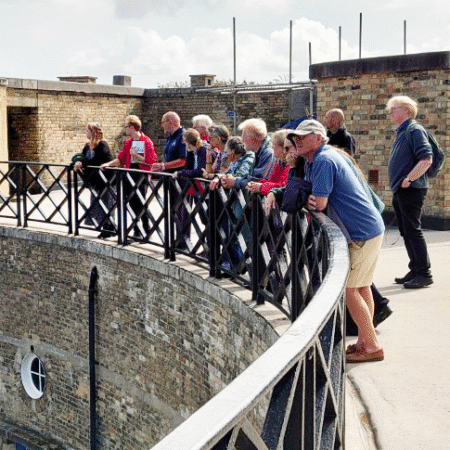
A Day at Harwich Redoubt – Strengthening Bonds Across the Estuary
Landguard Volunteers visit Harwich Redoubt to learn more about this fascinating site.

When the Suffragettes Came to Felixstowe: A Fiery Protest That Shook the Seaside
In 1914, Suffragettes set fire to Felixstowe’s Bath Hotel.

Landguard’s Canine Code: Respect, Protect, Enjoy
By following our simple guidelines, you can help protect nature while making the most of your visit.

Protecting Ringed Plovers at Landguard Nature Reserve
Together, we can ensure Landguard remains a safe and undisturbed habitat for breeding birds.

Smooth Newt
The most common newt species in the UK, often found in garden ponds. It has a grey, brown body with an orange belly covered in black spots.

Common Frog
A widespread amphibian known for its smooth skin and powerful jumping ability. It breeds in ponds, laying eggs in large clumps of spawn.

Slowworm
A legless lizard often mistaken for a snake. It has smooth, shiny skin and is commonly found in gardens, grasslands, and woodlands.

Grass Snake
Often found near water, where it hunts amphibians. It is non-venomous and known for its distinctive yellow and black collar

Common Lizard
Common lizard give birth to live young rather than laying eggs

Limpet
It grazes on algae and plays a crucial role in maintaining intertidal ecosystems.

Acorn Barnacles
They filter-feed using feathery appendages called cirri and are related to crabs and lobsters.

Sea Gooseberry
Sea gooseberries are small, translucent comb jellies found in coastal waters.

Mussel
A bivalve mollusc commonly found attached to rocks in intertidal zones, filtering plankton from the water.

Common Restharrow
It gets its name from its tough roots, which were strong enough to stop horse drawn harrows in their tracks.

Sheep Sorrel
A small, perennial herb with arrow shaped leaves and reddish stems.

Lady’s Bedstraw
Historically, it was used to stuff mattresses and repel insects.

Stinking Goosefoot
A low growing annual plant with a strong, unpleasant odour. It is found in coastal habitats and disturbed ground.

Scarlet Pimpernel
Historically known as "Shepherd’s Weatherglass" because its flowers close when bad weather approaches.

Elder
A deciduous shrub or small tree with fragrant white flowers and dark purple berries.

St. John’s Wort
The flowers have a cluster of prominent golden stamens at their centre, creating a sunburst effect that attracts pollinators.

Bramble
A thorny shrub that produces blackberries in late summer. Found in hedgerows, woodlands, and scrubland, it provides food and shelter for wildlife.

Sea Spurge
A fleshy, grey green plant with cup shaped greenish yellow flowers. Common in sand dunes and coastal areas.

Sea Pea
A trailing perennial with purple flowers, found on sandy and gravel beaches. Its seeds can remain viable in seawater for years, allowing it to spread widely.

Viper’s Bugloss
A favourite of bees and butterflies, this striking wildflower has vivid blue, funnel shaped flowers that bloom from May to September.

Get on track for great car free family days out in Suffolk.
Get on track for great car free days out around the Suffolk Coast where there's something for everyone.

Clare Sams – ‘Self/Contained’ Exhibition
About Felixstowe Museum's temporary exhibition for 2025.


